


When it comes to How Do You Ensure the Safety and Well-Being of Clients During Home Care?, top home care agencies safeguard clients through continuous hazard assessment, personalized care plans, and skilled caregiver matching. Gentle Hearts Home Care applies this model across the Greater Philadelphia Metro Area, offering medication management, personal care assistance, and flexible scheduling—from hourly visits to 24-hour live-in support—ensuring families gain consistent, professional oversight and genuine peace of mind.
What Does Client Safety Mean at Home?
Ensuring the safety and well-being of clients during home care starts with a simple truth: a private residence has no nurse’s station down the hall. Hospitals and facilities layer in built-in supervision. A family home does not. That gap means continuous assessment and mitigation of real and potential hazards falls squarely on the caregiver, every visit, every shift.
Families lose peace of mind fast when that vigilance slips. A loose rug, a missed medication, an unlocked door. Small oversights compound into real danger for a loved one living alone or with limited mobility.
Gentle Hearts Home Care addresses this gap by matching families with professional, skilled, and deeply compassionate caregivers across three service levels:
-
Hourly support for daytime check-ins and task assistance
-
Overnight assistance for households needing coverage after dark
-
24-hour live-in care for round-the-clock supervision and support
What is the real goal behind home care safety measures?
Safety measures exist to keep clients functioning at their best, not just to prevent accidents. Home health care aims to help individuals improve function, live with greater independence, and avoid unnecessary hospitalization. That goal reframes safety as something active — supporting mobility, routine, and dignity — rather than simply removing risk. For families, that distinction matters: a safe home is one where a parent still gets to live, not merely exist under watch.
How Do You Ensure the Safety and Well-Being of Clients During Home Care?
Safety and well-being during home care rest on trained caregivers, structured oversight, and respect for each client’s independence. Gentle Hearts Home Care builds every visit around ensuring the safety and well-being of clients during home care through consistent, hands-on attention rather than generic checklists.
Caregivers observe each client’s strengths, preferences, and daily rhythms before deciding how to help. This sensitivity lets them protect safety without stripping away autonomy. A client who dresses independently, for example, keeps doing so. A caregiver only steps in with warmth and dignity when a task genuinely requires hands-on assistance. That balance prevents two common home-care risks: over-helping, which erodes confidence and mobility, and under-helping, which leaves real hazards unaddressed.
Medication management plays a central role in this protective framework. Missed doses, duplicate doses, and dangerous drug interactions cause many of the emergencies that send older adults back to the hospital. Structured medication oversight closes that gap by keeping dosing accurate and routines consistent.
What Standards Should a Home Care Agency Meet?
A trustworthy agency maintains proper licensing, thorough background checks, ongoing caregiver training, and transparent communication with families. These four standards are non-negotiable, not optional extras. Families should treat their absence as a warning sign, not a minor gap.
How Do Caregivers Balance Safety With a Client’s Independence?
Caregivers assess what a client can still do alone and support that independence first. Hands-on help arrives only when a task poses real risk. It’s delivered with dignity rather than as a blanket restriction.
|
Safety Priority |
How It Protects the Client |
|---|---|
|
Individualized attention |
Reduces missteps by matching help to actual need |
|
Dignified hands-on support |
Prevents falls and injury during high-risk tasks |
|
Medication oversight |
Lowers risk of dosing errors and adverse events |
|
Licensing, background checks, training, transparency |
Confirms professional, accountable care |
Families weighing options should ask any agency how it documents these four practices before committing.

What Safety Risks Hide in the Home Environment?
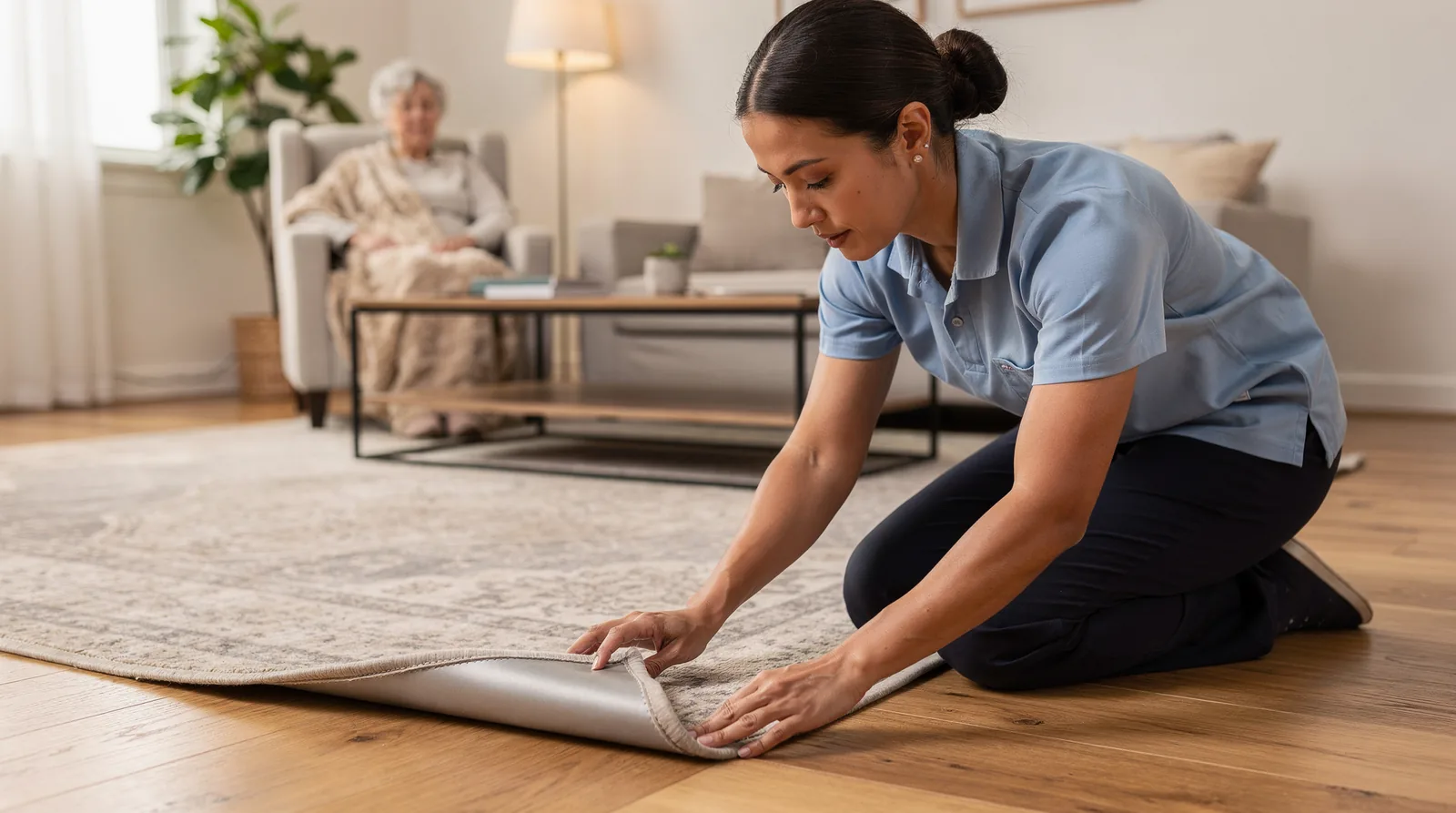
Ordinary rooms conceal extraordinary risks for aging adults and people with mobility limits. Loose rugs, dim hallways, cluttered counters, and unattended stairs turn a familiar living room into a hazard zone. Facilities solve this problem with round-the-clock staff who monitor every hallway and room. Private homes rarely have that built-in layer of supervision. That gap places the responsibility for ensuring the safety and well-being of clients during home care squarely on families and their chosen caregiving team.
Meeting that responsibility means treating a household the way a nurse treats a hospital ward: never assuming yesterday’s safe space stays safe today. A throw rug that was fine last month becomes a tripping hazard once a client’s gait changes. Continuous hazard review, not a one-time walkthrough, keeps pace with those shifts.
What household hazards get overlooked most often?
Clutter tops the list. Stacks of mail, tangled cords, and unwashed dishes narrow walking paths and invite falls. Routine light housekeeping and domestic upkeep clear these obstacles before they cause injury, keeping floors, counters, and stairwells navigable.
Does getting around town create risk too?
Yes. Driving errors, missed medical appointments, or unsafe walking to a pharmacy all threaten independence. Dependable transportation and errand assistance removes that exposure, letting a loved one keep appointments and outings without facing the road alone.
Common in-home hazards worth flagging during any assessment:
-
Loose rugs, cords, or uneven flooring
-
Poor lighting in stairwells and bathrooms
-
Cluttered counters and walkways
-
Unsafe or unassisted transportation to appointments and errands
-
Expired medications left within easy reach

How Should Families Vet a Home Care Agency?
Vetting starts with a simple question: does this agency fit the family’s specific situation, not just its credentials? Credentials matter, but the right match depends on cultural compatibility, medical expertise, scheduling flexibility, and a care philosophy that aligns with the family’s values. Families who ensure the safety and well-being of clients during home care ask pointed questions before signing any agreement, rather than relying on a glossy brochure.
Gentle Hearts Home Care Agency, based in Clifton Heights, Pennsylvania, serves families throughout the Greater Philadelphia Metro Area. cite-2 Founded on core values of compassion, respect, and family-centered care, the agency was built around a belief that support should honor a client’s independence, not replace it. cite-3 That founding philosophy shapes how caregivers are matched to families from the first conversation.
What questions should families ask during a vetting call?
Families evaluating an agency should look beyond licensing paperwork and ask how caregivers are actually matched to clients. A short list helps organize the conversation:
-
Does the agency’s care philosophy match the family’s expectations for daily routines?
-
Are caregivers selected for compatibility, not just availability?
-
Does the service area cover the family’s neighborhood reliably?
-
Does the agency offer companionship and recreational activities, not only physical assistance?
Does emotional support matter as much as physical care?
Emotional well-being carries equal weight to physical safety in a well-run home care plan. Companionship and recreation services keep clients engaged and connected, easing isolation that often accompanies aging or disability. A trustworthy agency treats conversation, hobbies, and social connection as core parts of care, not optional extras layered on top of a task list.
What Should You Expect From Ongoing Care Communication?
Reliable updates on a loved one’s daily condition form the backbone of trustworthy home care. Families who go weeks without a status report lose visibility into subtle changes. A missed meal, a new limp, confusion during a conversation — until those small signs become a crisis. Consistent, structured communication is how families confirm that caregivers are ensuring the safety and well-being of clients during home care, rather than simply hoping for the best.
Since home health services operate under a physician’s direction, caregivers coordinate with medical providers to maintain continuity of oversight. This means updates aren’t limited to caregiver notes; they connect back to a client’s broader medical plan.
What information should a care update include?
A thorough update covers more than a general “how’s it going.” Families should expect specifics tied to daily routines and observable changes.
-
Meal intake and adherence to diet planning, since nutrition patterns often signal early health shifts
-
Progress with personal care and daily assistance tasks
-
Mood, mobility, or cognitive changes worth flagging to a physician
-
Any missed medications or scheduling concerns
How often should families hear from caregivers?
Frequency varies by care plan, but updates should never feel sporadic or reactive. Families deserve a predictable rhythm of communication, not silence broken only by emergencies.
Gentle Hearts Home Care built its mission around connecting families with professional, skilled, and deeply compassionate caregivers who deliver unparalleled care with a gentle touch. cite-2 That commitment extends past hands-on tasks into honest, ongoing dialog. Because peace of mind depends on knowing, not guessing, how a loved one is really doing.
FAQ
How does Gentle Hearts Home Care ensure client safety at home?
Gentle Hearts Home Care matches families with skilled, compassionate caregivers who continuously assess hazards, manage medications, and provide personal care assistance across the Greater Philadelphia Metro Area, serving clients from Clifton Heights, Pennsylvania.
What levels of care does Gentle Hearts Home Care offer?
Gentle Hearts Home Care provides hourly support for daytime check-ins, overnight assistance for after-dark coverage, and 24-hour live-in care for round-the-clock supervision and support.
Why does medication management matter for client safety?
Medication management prevents missed doses, duplicate doses, and dangerous drug interactions, which cause many emergencies that send older adults back to the hospital. Structured oversight keeps dosing accurate and routines consistent.
Conclusion
Ensuring the safety and well-being of clients during home care is never a one-time checklist — it’s an ongoing practice built on continuous hazard assessment, medication oversight, and caregivers who know each client’s strengths and routines well enough to help without taking over. From clearing everyday hazards like loose rugs and cluttered walkways, to vetting an agency’s licensing and communication standards, to keeping families informed with regular updates, every layer works together to protect independence as much as safety itself.
Gentle Hearts Home Care brings this approach to families across the Greater Philadelphia Metro Area, matching clients with skilled, compassionate caregivers and flexible support — from hourly visits to 24-hour live-in care. For families evaluating their options, the questions and standards outlined here offer a practical starting point for finding care that protects a loved one’s safety while honoring their dignity and independence.
