


In‑home medication management is a practical, person‑centered way to help seniors follow their prescribed treatments and stay safer at home. As people age, memory lapses, changes in mobility, and complex drug regimens can make it hard to take medications correctly. Below we outline how at‑home medication support improves adherence, reduces risks, and fits into a broader plan of care that includes nutrition, transportation, and technology.
Understanding these components helps families choose the right supports so their older loved ones can maintain health, independence, and peace of mind. Each section explains a specific benefit and how caregivers and tools work together to deliver better outcomes.
Medication Adherence Solutions
Practical adherence solutions help seniors take the right medicine at the right time. These approaches include reminders, organization systems, and predictable routines that make daily medication simpler and more reliable.
Medication Reminders
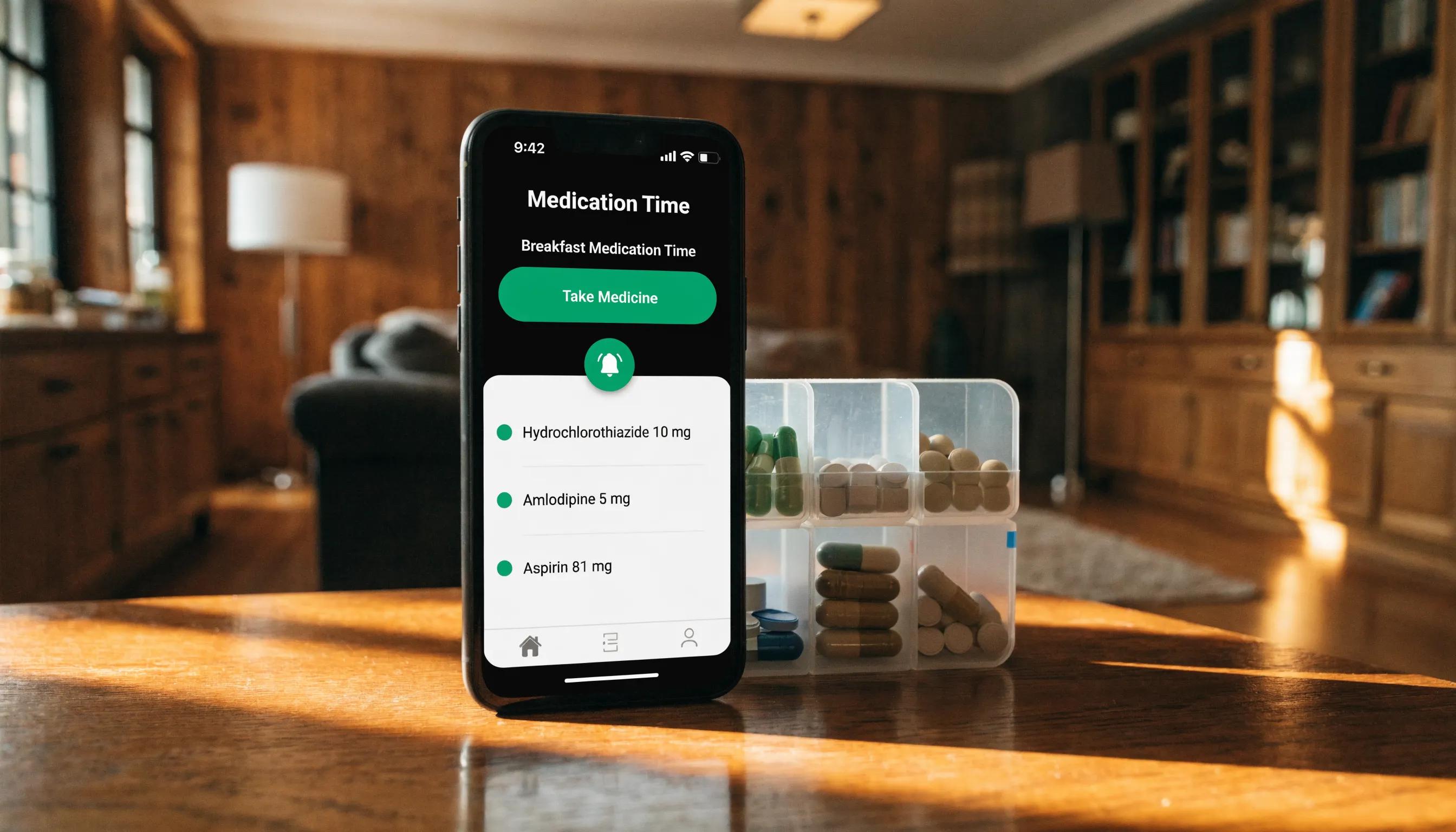
Reminders—delivered by apps, automated calls, alarms, or smart devices—give seniors a consistent cue to take their medicines. When reminders are paired with friendly caregiver check‑ins, seniors are far less likely to miss doses. That combination supports daily adherence and leads to clearer, more predictable health results.
Medication Organization Support
Simple organizational tools, like pill organizers and dose trays, reduce confusion and make it obvious what to take and when. These visual systems cut down on mistakes and help seniors feel more in control of their care, especially when caregivers set them up and review them regularly.
Routine & Schedule Reinforcement
Caregivers help turn medication plans into steady habits by tying doses to daily routines—meals, bedtime, or morning activities. That structure boosts consistency and accountability. Evidence shows that seniors who follow dependable routines experience fewer medication‑related complications.
Safety Improvements
At‑home medication management increases safety by spotting problems early, preventing errors, and creating checks that reduce risk.
Observation & Reporting

Caregivers observe how medications are taken and report missed doses, side effects, or difficulties. Timely reporting lets families and clinicians intervene before small issues become emergencies. Regular documentation and clear communication form a dependable safety net for seniors managing multiple prescriptions.
Promoting Independence
Effective home support is designed to preserve independence, not replace it. With caregiver guidance, seniors can learn systems that reduce reliance on memory while maintaining dignity and confidence in handling their own care.
Overall Impact on Seniors’ Health and Wellbeing
Consistent medication management at home improves control of chronic conditions, lowers the risk of avoidable hospital visits, and enhances daily quality of life. When medication routines work, seniors often report better energy, fewer setbacks, and greater satisfaction with their care.
What Are the Key Benefits of In-Home Medication Management for Seniors?
In‑home medication management delivers clear advantages:
-
Better adherence: Structured supports make it easier to follow prescriptions correctly.
-
Greater safety: Ongoing monitoring and caregiver oversight reduce the chance of errors.
-
Improved health outcomes: Reliable medication use helps control symptoms, lower hospitalization risk, and improve daily functioning.
These gains depend on properly trained caregivers and systems that fit each senior’s needs.
How Does Medication Management Improve Senior Medication Adherence?
Medication management combines reminders, organization, and caregiver involvement to make adherence feel natural rather than burdensome. Personalized plans and regular follow‑ups help seniors stay on track and adapt strategies when needs change.
In What Ways Does In-Home Management Reduce Medication Errors for Elderly Safety?
Caregivers reduce errors by verifying doses, tracking what was taken, and checking for concerning symptoms. Frequent check‑ins and quick intervention when problems appear lower the likelihood of adverse events tied to missed or incorrect doses.
How Do Caregivers Support Seniors’ Medication Management at Home?
Caregivers bring training, routine, and reassurance—helping seniors understand medicines, organizing schedules, and offering the emotional support that encourages consistent use.
What Training Do Caregivers Receive for Medication Management?
Caregivers learn to recognize interactions and side effects, document medication administration, and use adherence tools safely. Ongoing education keeps their skills current so they can respond appropriately to changing needs.
How Do Caregivers Assist with Medication Reminders and Regimen Adherence?
Caregivers set up reminders, perform regular checks, and tailor strategies—for example, pairing pills with meals or activities. Their consistent presence and gentle encouragement often lead to measurable improvements in adherence.
How Does Nutrition Impact Medication Effectiveness for Seniors?
What seniors eat can influence how well medications work. Some foods and nutrients change drug absorption or interact with specific prescriptions, so aligning meals with medication regimens is an important part of safe care.
What Are Best Practices for Meal Preparation Supporting Medication Adherence?
Best practices include planning balanced meals, timing food intake around medication schedules, and avoiding combinations known to interfere with certain drugs. Caregivers can help design meal plans that support both nutrition and medication needs.
Which Nutrient Interactions Should Seniors Be Aware of When Taking Medications?
Seniors should note common interactions—such as calcium with some antibiotics or vitamin K with blood thinners—and discuss these with clinicians and caregivers to plan meals and medication timing safely.
What Role Does Transportation Support Play in Home-Based Pharmacy Services for Seniors?
Reliable transportation helps seniors get prescriptions on time and avoid gaps in therapy. It’s a simple but essential part of consistent medication management.
How Does Transportation Assistance Improve Medication Pickup and Adherence?
When seniors have dependable rides to the pharmacy, they’re less likely to run out of medicine and more likely to keep to their treatment plans. This continuity supports better health outcomes.
What Are Common Transportation Solutions for Seniors Accessing Pharmacies?
Options include senior‑friendly ride services, accessible public transit, and community volunteer programs. These services make it easier for seniors to collect prescriptions and follow their care plans.
How Is Technology Enhancing In-Home Medication Management for Elderly Patients?
Technology—from apps to smart dispensers—adds reliability and visibility to medication routines, giving seniors, families, and caregivers useful tools to track and manage doses.
What Medication Reminder Devices and Apps Are Available for Seniors?
There are many user‑friendly apps and devices that offer customizable alerts, simple displays, and reporting features so caregivers can monitor adherence and step in when needed. These tools can simplify daily routines and reduce stress for everyone involved.
Studies have examined how advanced technologies and telecare platforms support medication adherence for older adults living at home.
Robotic Systems for Enhancing Medication Adherence Among Elderly Home-Care Patients
This pilot assessed the safety and usability of an integrated robotic system paired with telecare to support medication routines for older adults receiving home care. The study focused on whether the technology could reliably help patients take medications and fit into everyday home settings. An in-home advanced robotic system to manage elderly home-care patients’ medications: A pilot safety and usability study, 2017
How Do Technology Tools Help Prevent Medication Errors and Improve Safety?
Automated tracking and alerts reduce missed doses and can warn caregivers about potential interactions or unusual patterns. When systems report adherence data, families and clinicians can respond quickly to issues, improving overall safety.
Smart dispensers offer a way to monitor real‑time medication use and support patients with chronic conditions in the home setting.
Smart Medication Dispensers for In-Home Adherence: A Comprehensive Study
This study reviewed the real‑world use of smart dispensers—devices that provide alerts, dispense doses, and record adherence—to evaluate usability, satisfaction, and the impact on caregiver support over a six‑month period. An in-home medication dispensing system to support medication adherence for patients with chronic conditions in the community setting: prospective …, T Patel, 2019
How Does Medication Management Reduce Hospital Readmissions for Seniors?
When seniors take medications correctly, complications and flare‑ups are less likely. Consistent medication management has been linked to fewer hospital stays and emergency visits by helping prevent avoidable deterioration of chronic conditions.
What Should Families Know About Choosing Medication Management Services?
Families should look for qualified caregivers, clear communication, and services that use practical technology when appropriate. Matching services to the senior’s routine and preferences leads to better adherence and greater peace of mind.
|
Solution Category |
Description |
Benefits |
|---|---|---|
|
Medication Reminders |
Tools that notify seniors of medication times |
Improves consistency and accountability |
|
Organization Tools |
Pill organizers and digital apps for managing medications |
Makes regimens easier to follow and reduces confusion |
|
Caregiver Support |
Professionals trained in medication management |
Offers oversight, assistance, and reassurance |
The combination of reminders, organization, and trained caregivers illustrates how a tailored approach to in‑home medication management can meaningfully improve a senior’s safety and quality of life.
Frequently Asked Questions
What are the signs that a senior may need in-home medication management?
Signs include frequent missed doses, confusion about what to take, trouble opening containers or reading labels, or multiple prescriptions that increase the risk of interactions. If family members notice changes in memory, behavior, or health tied to medication use, it’s time to consider in‑home support.
Can family members assist in medication management for seniors?
Absolutely. Family members can help set up organizers, create reminder systems, monitor for side effects, and coordinate with caregivers and clinicians. When families work together with professional caregivers, seniors benefit from a reliable support network.
How can technology aid in the medication management process for seniors?
Technology—apps, smart dispensers, and telehealth—provides reminders, records adherence, and enables remote monitoring. These tools make it easier to track doses and let caregivers intervene quickly when problems arise.
What should be considered when selecting a medication management service?
Evaluate caregiver training, the range of services (including tech options), communication practices, and how care plans are personalized. Reviews, references, and clear policies around documentation and reporting also help identify trustworthy providers.
How do caregivers ensure medication safety during management?
Caregivers document doses, watch for side effects, check for interactions, and communicate changes to families and clinicians. Regular reviews of the medication list and proactive reporting of concerns are key safety practices.
What role does nutrition play in medication management for seniors?
Nutrition affects how medications are absorbed and tolerated. Caregivers can help plan meals that avoid known drug‑food interactions and ensure seniors receive the nutrients needed to support overall health and medication effectiveness.
Conclusion
In‑home medication management strengthens adherence, reduces risk, and supports seniors’ independence and well‑being. With trained caregivers and thoughtful use of technology, families can help their loved ones follow treatment plans more consistently and avoid preventable complications. To learn more about tailored medication management options and how they can fit into a senior’s care plan, explore our services and speak with a care specialist today.
